
From Guesswork to Evidence in Estate Governance
Summary: Trustees are accountable to residents but often manage with incomplete information. This article explores how a community management platform gives trustees clear, evidence-based visibility over access, maintenance and communication.
Serving as a trustee on an estate board is a role built on accountability. Trustees make decisions about levies, security, maintenance and the general running of the community, and they answer for those decisions at the annual general meeting and whenever residents raise concerns. Yet many trustees take on this responsibility while working with information that is incomplete, scattered or simply unavailable. They are asked to govern a complex operation, but the tools to see clearly into that operation are often missing.
Consider a typical trustee’s information sources. Security incidents may be relayed verbally or recorded in a register at the gate that the board rarely sees. Maintenance issues arrive as a mix of phone calls, messages and corridor conversations. The access list lives in the gate system and is opaque to anyone not sitting at that terminal. Financial information comes from the managing agent on its own schedule. Each source is real, but none of them combine into a clear picture, and assembling that picture for a board meeting is laborious and often falls to a single volunteer.
This information gap has real consequences. Without clear visibility, trustees end up governing by anecdote. A vocal resident’s complaint can carry more weight than a quiet but serious recurring problem, simply because it is more visible. Maintenance spending is hard to justify because the underlying pattern is not documented. Security decisions are made on impression rather than evidence. And when residents ask reasonable questions, such as how many visitors entered last month or how long maintenance requests are taking to resolve, the honest answer is too often that nobody knows.
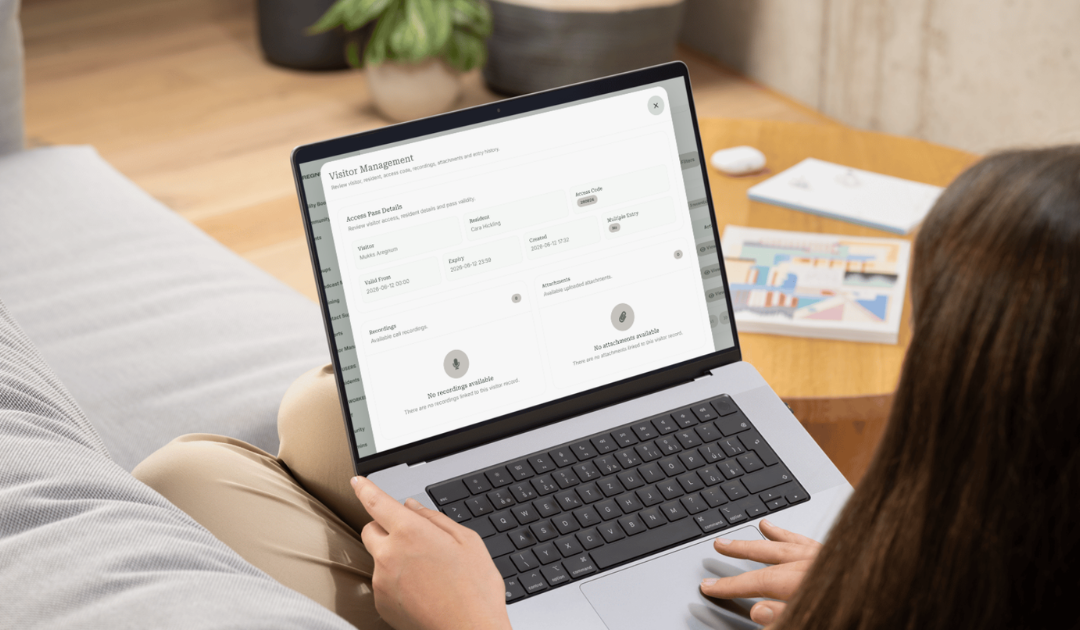
Aregnum changes the trustee’s relationship with information by capturing the estate’s operations as they happen and presenting them through a single dashboard. Access events, visitor entries, maintenance requests and resident communications are recorded as a normal part of using the platform. The trustee does not have to commission a special exercise to find out what is going on, because the record already exists. Governance shifts from guesswork to evidence.
Take maintenance as an example. When residents log maintenance issues through the app, every request becomes a tracked item with a status. Over a quarter, this produces a clear record of how many issues were raised, how many were resolved, how long resolution took and which issues recurred. A trustee preparing for a board meeting can speak to this directly. Recurring problems with a particular asset become visible and can be addressed at the root rather than repeatedly patched, which is both better governance and better use of the community’s money.
Access and visitor data offer the same clarity for security governance. Trustees can see visitor volumes, entry patterns and the current access list rather than relying on the impression that things are or are not under control. If residents raise concerns about security, the board can respond with facts. If the board wants to evaluate whether to change security arrangements, it has data to inform the decision rather than competing opinions.
Communication is also strengthened by visibility. When notices and alerts are sent through the platform, there is a record of what was communicated and when. If a dispute arises about whether residents were informed of a decision or a hazard, the board has evidence rather than recollection. This protects the trustees as much as it serves the residents, because trustees carry genuine responsibility and deserve to be able to demonstrate that they acted properly.
There is a subtler benefit to all of this, which is the effect on the relationship between the board and the residents. Estates can become fractious when residents feel they are being kept in the dark or when decisions appear arbitrary. Transparency is the antidote. When a board can show clearly what is happening in the estate and why decisions are being made, trust improves. A platform that produces this transparency as a by-product of normal operation makes good governance easier and reduces the friction that volunteer trustees so often have to absorb personally.
It is worth noting that this visibility does not require trustees to become technical experts or to spend hours in a system. The point of a well-designed dashboard is that the relevant information is surfaced clearly, so a trustee can get the picture they need quickly and return to the actual work of governing. Aregnum’s web dashboard is designed for exactly this kind of oversight use, distinct from the resident-facing app, so that each audience gets the view appropriate to them.
The contrast between governing by anecdote and governing by evidence becomes especially sharp at the annual general meeting, which is the moment trustees are most directly accountable to residents. At a meeting run on anecdote, discussion is dominated by whoever is most vocal, decisions are justified by impression, and the trustees are vulnerable to any resident who asserts a version of events the board cannot disprove. At a meeting backed by evidence, the board can present a clear picture of the year: how many visitors entered, how maintenance was handled, what security activity occurred. The conversation shifts from competing impressions to a shared factual basis, which makes for better decisions and a far less fractious meeting. The data does not just inform the board, it changes the character of the community’s governance.
Visibility also protects trustees personally, which matters because trusteeship carries real exposure. Trustees make decisions involving significant sums of the community’s money and significant responsibilities for security and safety. If a decision is later questioned, or if something goes wrong, trustees can find themselves having to justify their conduct, sometimes in formal settings. A board that governed on the basis of recorded evidence can demonstrate that it acted reasonably and on a proper basis. A board that governed on impression has nothing to point to. Good records are not only a tool for better decisions, they are a form of protection for the volunteers who take on the genuine risks of trusteeship.
It is important to distinguish visibility from surveillance, because the two can be confused and the distinction matters for how residents feel about being part of the community. The visibility a platform gives trustees is operational: it concerns the running of the estate, such as access activity, maintenance and communication, rather than the monitoring of individual residents’ private lives. Good governance requires the board to understand how the estate operates, not to watch what residents do in their homes. Aregnum’s oversight is designed around the operational picture trustees need to govern, and being clear about this distinction helps maintain residents’ trust that the platform serves the community rather than spying on it.
There is also a continuity benefit that serves the community across changes in its leadership. Estate boards turn over: trustees serve for a period and then hand on to others. When governance depends on the knowledge held in individual trustees’ heads, each handover loses information, and incoming trustees start partly blind. When the estate’s operations are recorded on a platform, incoming trustees inherit a documented picture of how the estate has been running, which allows them to govern competently from the start rather than spending months rebuilding an understanding their predecessors had. This continuity makes the whole governance of the estate more stable over time, which is particularly valuable for communities that rely on rotating volunteer boards.
In the end, the case for giving trustees real visibility comes down to a simple principle: people govern better when they can see what they are governing. A board that operates in the dark, reliant on anecdote and impression, makes worse decisions, is more vulnerable to manipulation by the loudest voices, and cannot demonstrate that it acted properly. A board that can see the estate’s operations clearly makes better decisions, treats residents more fairly, and can stand behind its choices with evidence. The visibility a platform provides is not a luxury that makes governance more comfortable; it is a foundation that makes governance more competent. For communities that entrust their security, their money and their wellbeing to volunteer boards, equipping those boards to see clearly is among the most consequential improvements a management platform can deliver, because it raises the quality of every decision that follows. And because trustees serve for limited terms before handing on, the visibility a platform provides also preserves institutional knowledge across changes in the board, so that each incoming group of trustees inherits a clear, documented picture rather than starting over in the dark. Continuity of understanding, as much as clarity in the moment, is part of what good visibility delivers to a community governed by rotating volunteers.
Trusteeship is a serious responsibility undertaken, in most estates, by residents giving their time voluntarily. They deserve tools that make that responsibility manageable and that let them govern on the basis of evidence. Giving trustees real visibility over community operations is one of the most valuable things a management platform can do, because it improves the quality of every decision the board makes and strengthens the trust on which the whole community depends.
Frequently Asked Questions
What can trustees see on the Aregnum dashboard?
The web dashboard gives trustees and management oversight of access events, visitor entries, maintenance requests and resident communications, all captured as a normal part of using the platform, so the board can govern on the basis of evidence.
Do trustees need technical skills to use the platform?
No. The dashboard is designed to surface relevant information clearly so trustees can get the picture they need quickly. It is built for oversight rather than requiring technical expertise.
Can the platform help us prepare for the annual general meeting?
Yes. Because operations are recorded as they happen, the data needed for reporting, such as maintenance resolution and visitor volumes, already exists, rather than having to be assembled from scattered sources before each meeting.
Does giving trustees visibility compromise resident privacy?
Aregnum is designed so that management and trustees see the operational oversight they need for governance, while residents interact through their own app. Access to information is structured around the appropriate role.
See Aregnum in action
Ready to turn your community into an effortless, secure haven?