How Cloud Infrastructure Lets Estates Grow Smoothly
Summary: As estates grow, manual systems buckle under the workload. This article looks at how a cloud-based community platform lets an estate scale in residents and complexity without a proportional increase in administrative effort.
Growth is usually good news for an estate. More homes occupied means a more vibrant community and a healthier financial base. But growth also places strain on the systems that run the estate, and estates that manage on manual or fragmented systems often find that the administrative burden grows faster than the community itself. What worked for fifty homes becomes unworkable at two hundred, and the management team finds itself overwhelmed by an operation that has outgrown its tools.
The reason manual systems do not scale well is that the effort they require tends to grow in proportion to the number of residents, and sometimes faster. Every additional resident is another set of access credentials to manage manually, another entry in a contact list that has to be maintained by hand, another source of maintenance requests handled through informal channels, and another household to communicate with. When each of these tasks depends on manual effort, doubling the residents roughly doubles the work, and the management team has to grow in step or fall behind. For estates run by volunteer trustees or a lean managing agent, growing the team is rarely an easy option.
Fragmentation makes this worse. When access, communication, maintenance and records live in separate systems, each new resident has to be entered into all of them, and each transition has to be coordinated across all of them. The coordination overhead grows with both the number of residents and the number of systems, and it is precisely this coordination that consumes a disproportionate amount of a manager’s time. The estate is not just doing more work, it is doing more work that is fiddly and error-prone.
Cloud-based platforms scale differently. Because Aregnum is built as cloud infrastructure, the platform itself absorbs the load of additional residents without requiring proportionally more administrative effort from the estate. Adding a resident is the same straightforward process whether the estate has fifty residents or five hundred. The systems do not need to be coordinated, because access, communication, maintenance and records are already part of one platform. The result is that the estate can grow in size and complexity while the administrative effort per resident stays roughly flat rather than climbing.
This matters because it changes what growth means for the management team. On manual systems, growth is something to be feared, because every new phase of the estate adds to a workload that is already stretched. On a platform built to scale, growth is something the estate can absorb comfortably, because the tools were designed for it. The management team can focus on the higher-value work of actually running the community well rather than being consumed by the mechanical task of keeping fragmented records in step.
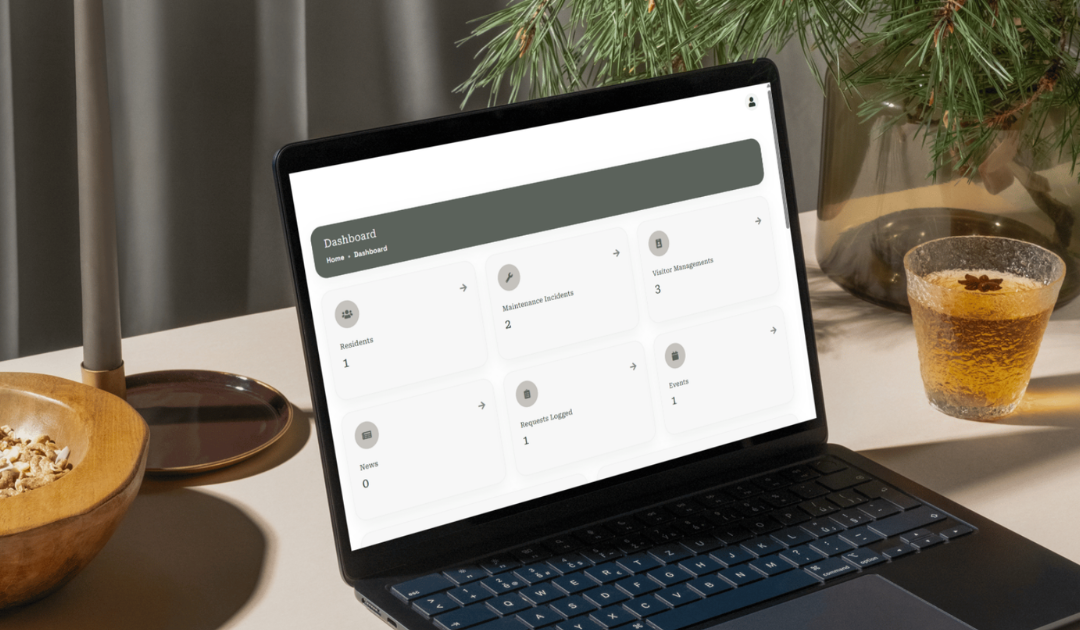
Reporting and oversight scale particularly well on a unified platform. In a manual system, producing a clear picture of the estate becomes harder as the estate grows, because there is more data scattered across more places. On Aregnum, oversight is a view on the dashboard regardless of the estate’s size, because the information is captured consistently as a by-product of normal operation. A trustee can understand a large estate as easily as a small one, which is essential because larger estates are exactly where good oversight matters most.
Communication scales smoothly as well. Sending a notice to fifty residents and sending it to five hundred is the same action on the platform, where on informal channels the difficulty of reaching everyone reliably grows with the community. Maintenance scales similarly, because tracking a hundred requests is simply a longer list on the same dashboard rather than a hundred separate verbal messages to keep in your head. The platform does the work of scale that would otherwise fall on the management team.
There is a financial dimension that connects to scale as well. As an estate grows, understanding its true operating costs becomes both more important and more complex. A platform that captures the estate’s operations makes it possible to understand costs in a structured way rather than guessing. For managing agents handling multiple estates, this clarity is essential, because they need to understand the profitability and cost of each estate they manage, and that understanding has to scale across their whole portfolio.
For estates that are growing or that anticipate growth, the choice of management infrastructure is effectively a choice about how painful that growth will be. Manual systems impose an escalating tax on growth, where every new phase makes the management harder. A platform built to scale removes that tax, letting the estate grow on its own merits without the administrative burden becoming the limiting factor. This is one of the strongest arguments for moving to a proper community management platform before the strain of growth forces the issue.
The concept of administrative effort per resident is the key to understanding why some estates scale comfortably and others buckle, and it deserves a clear explanation. On a manual system, each resident requires a roughly fixed amount of ongoing administrative attention, so total effort rises in proportion to the number of residents, and at some point that total exceeds what the management team can provide. On a platform built to scale, much of the per-resident effort is absorbed by the platform itself, so the marginal effort of each additional resident is small and total effort rises far more slowly than resident numbers. The estate that understands this distinction can see why simply working harder is not a sustainable answer to growth, and why the right response is infrastructure that changes the per-resident cost rather than a team that keeps expanding to absorb a rising burden.
Growth often brings not just more residents but more complexity, and a good platform absorbs both. A growing estate may add phases, introduce new shared facilities, take on more varied types of resident, and face more sophisticated security needs. Each of these adds complexity over and above the simple increase in numbers. Manual systems struggle with complexity even more than with volume, because complexity multiplies the coordination required across fragmented tools. A unified platform handles added complexity more gracefully, because the new elements are managed within the same coherent system rather than bolted on as further fragments. Estates anticipating not just growth but increasing sophistication have particular reason to build on infrastructure designed to absorb both.
The role of the managing agent changes interestingly as estates scale on a proper platform, and this matters for the professional management of communities. On fragmented systems, an agent’s capacity to manage estates is limited by the manual burden each estate imposes, so an agent can only handle so many before quality suffers. On a scalable platform, the per-estate burden is lower and more predictable, which allows an agent to manage more estates well, and to understand each one clearly through consistent reporting. This is good for the agent, who can grow their practice, and good for the estates, who get more attentive management. The platform effectively raises the ceiling on how much good management one agent can provide, which benefits the whole ecosystem of professionally managed communities.
It is worth being candid that scaling smoothly still requires good practice, not just good infrastructure, because a platform is an enabler rather than a guarantee. An estate that adopts a scalable platform but neglects the discipline of clean onboarding, accurate records and proper use of the system will still encounter difficulties as it grows, because the platform cannot compensate for poor practice. The platform removes the mechanical barrier to scale, the rising administrative burden, but the estate still has to use it well. The estates that scale most smoothly are those that combine the right infrastructure with sound practice, using the platform’s capacity to scale as a foundation on which good management is built rather than as a substitute for it.
Ultimately, the question of scale is a question about whether an estate’s future is something to anticipate with confidence or to dread. An estate on manual systems experiences growth as an accumulating burden, each new phase adding to a workload that is already stretched, until management capacity becomes the constraint on what the community can become. An estate on infrastructure built to scale experiences growth as something it can absorb, free to develop on its own merits without its management tools becoming the limiting factor. Choosing the right infrastructure is therefore a choice about the estate’s future trajectory, not just its present convenience. It determines whether the estate can grow into what its residents and trustees hope for, or whether it will be held back by the very systems meant to support it. The estates that grow most gracefully are those that put the right infrastructure in place before the strain of growth forces the issue, so that expansion is met by tools already equal to it rather than by systems scrambling to catch up.
Aregnum is designed so that estates can grow smoothly, with infrastructure that scales with them rather than systems they will outgrow. The aim is that an estate’s management capacity is never the thing that holds back its development, and that growth, when it comes, is something the community can welcome rather than something its management team has to dread.
Frequently Asked Questions
Will Aregnum still work well as our estate grows?
Yes. Aregnum is built as cloud infrastructure designed to scale, so adding residents is the same straightforward process whether you have fifty or five hundred, without a proportional increase in administrative effort.
Does managing a larger estate mean more work on the platform?
Because access, communication, maintenance and records are part of one platform, the per-resident administrative effort stays roughly flat as the estate grows, rather than climbing the way it does on fragmented manual systems.
Can the platform handle oversight of a large estate?
Yes. Oversight is a view on the dashboard regardless of estate size, because operations are captured consistently as a by-product of normal use, so a large estate is as understandable as a small one.
Is Aregnum suitable for managing agents with several estates?
Yes. A unified platform that captures each estate’s operations allows agents to understand the costs and running of each estate in a structured way, which is essential for managing a portfolio of communities.
See Aregnum in action
Ready to turn your community into an effortless, secure haven?