
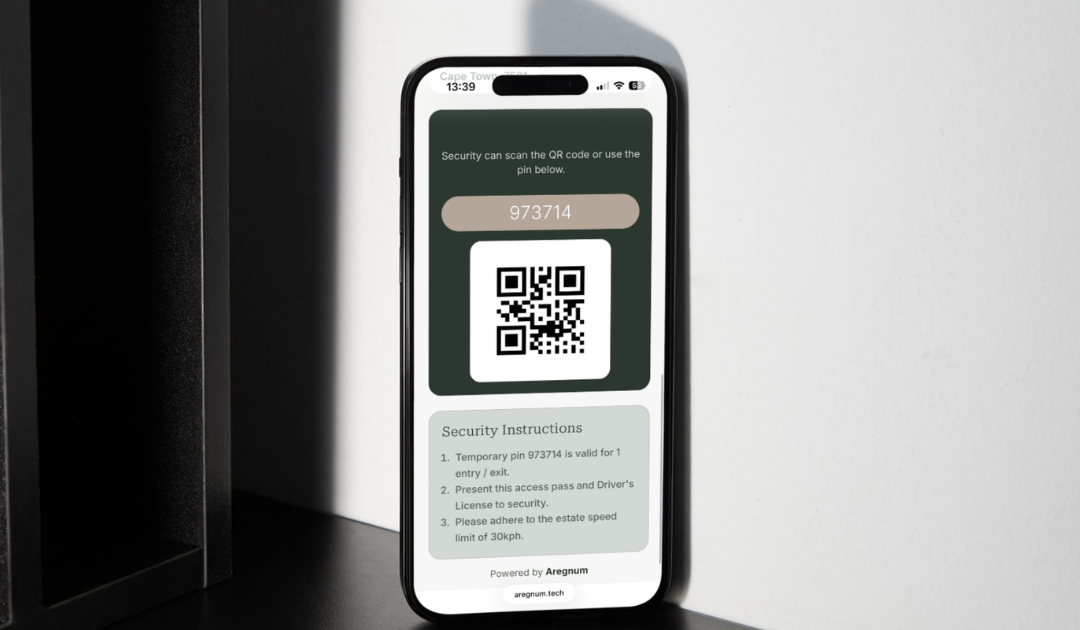
Letting Hosts Welcome Guests Before They Arrive
Summary: Pre-authorisation changes visitor management from a gatekeeping obstacle into a smooth welcome. This article explores how authorising visitors in advance improves the experience for everyone involved.
Most visitor management is framed around gatekeeping: the job of stopping unwanted people from getting in. This is a legitimate function, but framing visitor management purely as gatekeeping misses half of what it should do, which is to welcome wanted visitors smoothly. A visitor who is expected and legitimate should have a good experience arriving at a property, not be treated as a suspect to be processed. Pre-authorisation is the feature that shifts visitor management from pure gatekeeping towards genuine welcome, and in doing so it improves the experience for the visitor, the host and the property alike.
Consider the experience of an expected visitor under traditional gatekeeping. They arrive, are stopped, and must wait while their identity and purpose are established. The guard or reception contacts the host to confirm them, which takes time. The visitor stands at the entrance feeling like an intruder being vetted, even though they were invited. The process treats every visitor as an unknown to be checked, which is appropriate for the genuinely unexpected arrival but is needlessly unwelcoming for the many visitors who were expected all along. The experience says you are a potential problem rather than a welcome guest.
Pre-authorisation inverts this for expected visitors. When a host authorises a visitor in advance, the visitor arrives already recognised and expected. There is no waiting while the host is contacted, because the host has already provided the confirmation by authorising the visit. The visitor moves through smoothly, experiencing a welcome rather than an interrogation. The property has shifted from treating the visitor as an unknown to be vetted to treating them as an expected guest to be welcomed, which is exactly how an invited visitor should be treated. The difference in experience is significant and immediate.
For the host, pre-authorisation is equally transformative. Under traditional gatekeeping, the host is interrupted at the moment their visitor arrives, pulled away from whatever they are doing to confirm the visit. With pre-authorisation, the host handles the authorisation in advance, at a moment that suits them, and is not interrupted when the visitor arrives. The host can ensure their guest is welcomed smoothly without having to drop everything at the moment of arrival. For a host expecting an important visitor, this control over the welcome is valuable: they can be confident their guest will have a good experience rather than being subjected to a confused vetting at the gate.
The property benefits because pre-authorisation makes visitor handling more efficient while keeping it secure. Expected visitors who are pre-authorised do not need to be processed from scratch on arrival, which reduces the load on guards or reception and prevents the bottlenecks that form when every visitor must be confirmed in real time. The property handles a higher volume of visitors more smoothly, with staff freed to focus on genuinely unexpected arrivals and exceptions rather than processing the many routine expected visits. Efficiency and good experience turn out to reinforce each other rather than trade off.
Crucially, pre-authorisation does not weaken security, which is the concern that makes some properties wary of it. A pre-authorised visit is more accountable, not less, because it is tied to a specific host who took the deliberate action of authorising it. The property knows not just that a visitor entered but that a particular host vouched for them in advance. This is stronger accountability than a visitor confirmed in a hurried phone call at the gate, where the confirmation is rushed and poorly recorded. Pre-authorisation makes the welcome smoother and the accountability clearer at the same time.
The mechanism works for more than just social guests. A host can pre-authorise a delivery, so it is received smoothly even if the host is out. They can authorise a contractor for the period of their work. They can authorise a regular visitor for recurring access. Each of these is a case where the host knows in advance who is coming and can arrange a smooth, recorded welcome rather than leaving the arrival to be handled cold at the gate. Pre-authorisation flexibly handles the full range of expected arrivals that a property deals with, not just the dinner guest.
There is a relationship dimension to the smooth welcome that is easy to overlook. The experience a visitor has arriving at a property reflects on the host and on the property. A client visiting a business, a guest visiting a resident, a candidate visiting for an interview: their first impression is formed at the entrance. A smooth, welcoming arrival creates a good impression, while a confused, suspicious vetting creates a poor one. Pre-authorisation lets hosts and properties make good first impressions consistently, which matters for the relationships those visits are meant to serve.
It is worth acknowledging that pre-authorisation depends on visits being known in advance, and not every visit is. The unexpected arrival still has to be handled, and a good system handles it appropriately. But the proportion of visits that are expected, and therefore can be pre-authorised, is large: invited guests, scheduled meetings, planned deliveries, arranged contractors. Pre-authorisation transforms the experience for this large majority while the system still deals properly with the genuinely unexpected minority. The point is to welcome the expected smoothly rather than treating everyone as unexpected by default.
The reframing of visitor management from gatekeeping to welcome is more than a change of emphasis; it reflects a truer understanding of what most visits actually are. The gatekeeping framing treats every arrival as a potential threat to be screened, which fits the rare hostile arrival but misrepresents the overwhelming majority of visits, which are expected, invited and entirely welcome. Designing the whole system around the rare threat means subjecting the many welcome visitors to treatment appropriate only to the few, which is both unwelcoming and inefficient. The welcome framing, enabled by pre-authorisation, treats the expected visitor as what they are, a guest, while still allowing appropriate caution for the genuinely unexpected. This is not a softening of security but a more accurate matching of treatment to the real nature of each arrival.
The host’s experience under pre-authorisation is transformed as thoroughly as the visitor’s, and this matters because the host is the one with the ongoing relationship to the property. Under real-time confirmation, the host is interrupted at the unpredictable moment their visitor arrives, pulled away from whatever they are doing to confirm a visit they already knew about. Under pre-authorisation, the host arranges the visit in advance at a moment that suits them and is not disturbed when the visitor arrives. The host moves from being a passive participant who must be available to confirm, to an active one who arranges a smooth welcome on their own terms. This shift gives the host control over how their visitors are received, which is particularly valuable when the visit matters, such as an important client or a special guest.
The efficiency that pre-authorisation brings is not in tension with the quality of welcome but reinforces it, which is worth making explicit because efficiency and experience are often assumed to trade off. A property handling expected visitors through pre-authorisation processes them more smoothly and with less staff effort, which might suggest a more impersonal experience. In fact the opposite results: because routine expected visits flow smoothly without consuming staff attention, staff are freed to provide genuine welcome and to attend to visitors who need real help, rather than being consumed by the mechanical task of confirming everyone. Efficiency and good experience reinforce each other, because the efficiency removes the friction and frees the human attention that good experience requires. The property becomes both more efficient and more welcoming at once.
It is honest to acknowledge that pre-authorisation depends on advance knowledge of a visit, and not every visit is known in advance, so the system must handle the unexpected arrival as well. The point is not that pre-authorisation covers every case but that it covers the large majority of cases, the invited guests, scheduled meetings, planned deliveries and arranged contractors, that are known ahead of time. For these, it transforms the experience; for the genuinely unexpected arrival, the property handles them appropriately through whatever means it has, with or without a guard. The transformation is real for the bulk of visits while the system still deals sensibly with the minority that cannot be anticipated, which is the right balance: welcome the expected smoothly, handle the unexpected with appropriate care.
Pre-authorisation, in the end, is valuable because it aligns the visitor experience with the truth of what most visits are: welcome, expected and worth receiving well. By letting hosts arrange a smooth welcome in advance, it treats invited visitors as the guests they are rather than as suspects to be screened, while keeping accountability clear and security intact. For any property that recognises its visitors as people it wants to receive well rather than obstacles to be processed, pre-authorisation is the feature that turns that recognition into a consistently better experience for everyone the property welcomes.
Pre-authorisation reframes visitor management from gatekeeping towards welcome, and in doing so it improves the experience for everyone. The visitor is welcomed rather than vetted, the host controls the welcome without being interrupted, and the property handles visitors more efficiently while keeping accountability clear. Aregnum is built around pre-authorisation precisely because it captures this dual benefit: a smoother experience and stronger accountability together. For a property that wants its visitors to feel welcome rather than processed, it is the feature that makes the difference.
Frequently Asked Questions
What is visitor pre-authorisation?
It is the ability for a host to authorise an expected visitor in advance, so the visitor arrives already recognised and expected rather than being vetted from scratch on arrival. The visit is tied to the host who authorised it and recorded.
How does pre-authorisation improve the visitor’s experience?
An expected, pre-authorised visitor moves through smoothly without waiting while the host is contacted, experiencing a welcome rather than an interrogation. The property treats them as an expected guest rather than an unknown to be vetted.
Does pre-authorisation make security weaker?
No. A pre-authorised visit is more accountable, not less, because it is tied to a specific host who deliberately authorised it in advance. This is stronger accountability than a visitor confirmed in a hurried phone call at the gate.
Can hosts pre-authorise deliveries and contractors too?
Yes. A host can pre-authorise deliveries, contractors for the period of their work, and recurring visitors, so the full range of expected arrivals is welcomed smoothly and recorded, not just social guests.
See Aregnum in action
Ready to turn your community into an effortless, secure haven?