
A Simple Code That Works Across Any Site
Summary: The humble visitor code is the key to smooth, recorded entry. This article explains how Aregnum’s code-based system makes visitor entry effortless for hosts, visitors and staff alike.
The mechanics of how a visitor gains entry shape the whole experience of visiting a property, for the visitor, for the host expecting them, and for any staff managing the entrance. Make entry complicated and every visit becomes a friction point; make it effortless and visits flow smoothly while still being properly recorded. The visitor code is the elegant solution to this, a simple credential that a host issues and a visitor presents, turning entry into a straightforward, recorded transaction rather than an improvised negotiation at the gate.
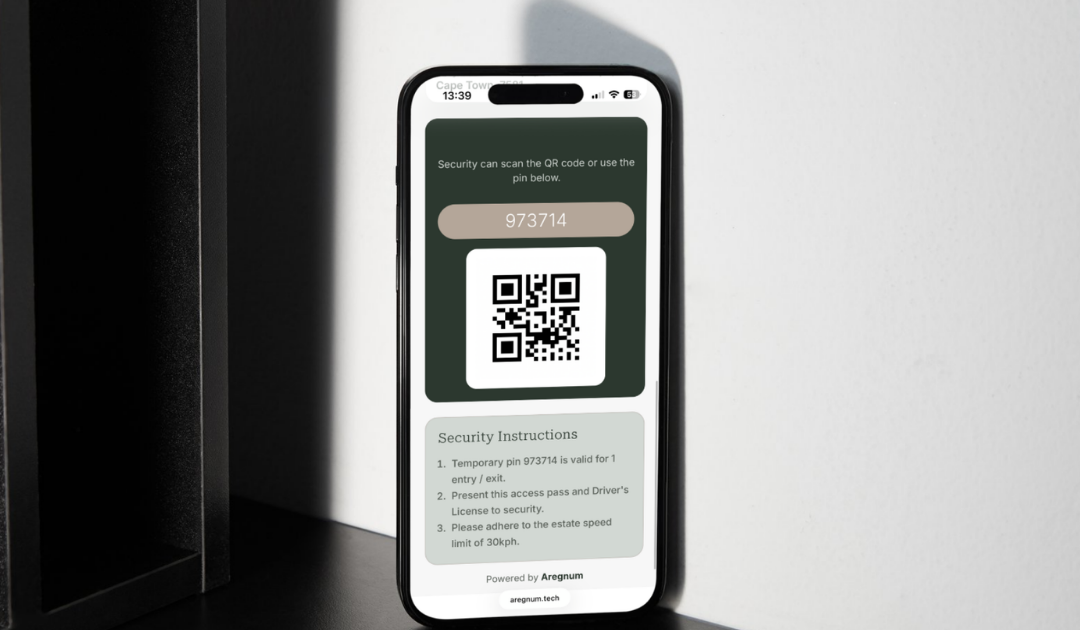
Aregnum’s approach centres on the visitor code. A host sends a visitor a code through the mobile application, delivered by WhatsApp, email or SMS, and the visitor presents that code on arrival to gain entry. This simple mechanism does a great deal of work. It identifies the visitor as expected, it ties the visit to the host who issued the code, and it provides the basis for a record of the entry, all through the straightforward act of issuing and presenting a code. The simplicity is what makes it effortless, and the effortlessness is what makes it actually used.
For the host, issuing a code is the work of seconds through channels they already use. There is no cumbersome process, no need to contact staff, no form to complete. The host sends the code through WhatsApp, email or SMS, the everyday channels through which they would communicate with their visitor anyway, and the task is done. This ease is what makes hosts actually pre-register their visitors routinely rather than skipping it, which in turn is what gives the property the smooth, recorded entry that pre-registration enables.
For the visitor, receiving and presenting a code is equally effortless. The code arrives through an everyday messaging channel, with no app to download or account to create, and presenting it on arrival is simple. The visitor arrives expected, gains entry smoothly, and is not held up while their identity and purpose are established from scratch. This smooth arrival is a far better experience than being treated as an unknown to be vetted, and it requires nothing of the visitor beyond presenting the code they were sent.
For staff, where a property has them, the code makes managing the entrance straightforward. A visitor presenting a valid code is readily confirmed as expected, which gives staff a quick, reliable basis for admitting them rather than having to contact the host to verify each arrival. This speeds up the entrance, reduces the load on staff, and lets them focus on genuine exceptions rather than confirming routine expected visitors. The code does the work of confirmation that would otherwise consume staff time.
The code-based approach works across any kind of site, which is part of its elegance. Whether the property is a large estate, an office park or an apartment building, whether it has security staff or operates with automated access, the visitor code functions the same way: a host issues it, a visitor presents it, entry is granted and recorded. This universality means the same simple, effortless mechanism serves the full range of properties and security arrangements, rather than each requiring a different approach to visitor entry.
Crucially, the effortlessness of the code does not come at the cost of the record. Each code is tied to the host who issued it, so when a visitor presents it, the entry can be recorded against that host. The property gains a record of who entered, for whom and on whose authority, produced as a by-product of the simple act of issuing and presenting a code. This is the ideal combination: entry that is effortless for everyone involved and yet fully recorded, where cumbersome systems often achieve neither.
The elegance of the code lies in how much complexity it quietly resolves into a single simple act. Underneath, the visitor needs to be identified, the visit needs to be authorised, the entry needs to be recorded, and the access hardware needs to be operated, all of which would be cumbersome if exposed to the people involved. The code folds all of this into the straightforward experience of a host sending something and a visitor presenting it, hiding the underlying work behind a simple surface. This is the mark of good design: the difficult parts are handled by the system while the people involved experience only simplicity, which is precisely why the code-based approach feels effortless even though it accomplishes a great deal.
The code also gives the host a sense of control over their visitors that benefits both security and convenience. Because entry depends on a code the host issues, the host decides who is expected and admitted, rather than this being either out of their hands or dependent on them being present to vouch for each arrival in person. The host can extend entry to a visitor in advance, from anywhere, simply by sending a code, which is convenient, and entry is limited to those the host has actually authorised, which is secure. This combination of host control and effortless issuance is part of what makes the code-based approach work so well, giving hosts an easy way to manage their own visitors within a system that keeps entry properly controlled.
The visitor code is a deceptively simple mechanism that solves the central challenge of visitor entry: making it effortless for hosts, visitors and staff while still producing a reliable record. Aregnum builds its visitor management around the code, issued through WhatsApp, email or SMS and presented on arrival, working across any site and any security arrangement. For a property that wants visitor entry to be smooth rather than a friction point, the visitor code is the elegant foundation on which effortless, recorded entry is built.
Frequently Asked Questions
How does a visitor code work?
A host sends a visitor a code through the mobile application, delivered by WhatsApp, email or SMS. The visitor presents the code on arrival to gain entry, which identifies them as expected and ties the visit to the host who issued it.
What makes the code effortless to use?
For hosts, issuing a code takes seconds through everyday channels. For visitors, it arrives through WhatsApp, email or SMS with no app to download. For staff, a valid code readily confirms an expected visitor without contacting the host.
Does the code work for different kinds of properties?
Yes. The code-based approach works across any site, whether an estate, office park or apartment building, and whether the property has security staff or uses automated access, with the same simple mechanism throughout.
Does effortless entry mean there is no record?
No. Each code is tied to the host who issued it, so when a visitor presents it, the entry is recorded against that host. The property gains a reliable record of who entered and on whose authority as a by-product of the simple process.
See Aregnum in action
Ready to turn your community into an effortless, secure haven?