
From Rooftop Terraces to Function Rooms Without Conflict
Summary: Shared spaces in apartment buildings cause friction when booking is informal. This article looks at how Aregnum’s facility booking keeps shared building amenities fair and conflict-free.
Many apartment buildings offer shared spaces that residents value: a function room for gatherings, a rooftop terrace, a communal lounge, a gym, a braai area. These shared amenities are part of what makes apartment living attractive, giving residents access to spaces beyond their own units. But shared spaces also have to be allocated among residents who all have a claim on them, and in a building where residents live in close proximity, conflict over shared spaces can sour relationships and become a persistent source of friction.
Informal booking of shared spaces produces predictable problems. Two residents both believe they have the function room for the same evening. The rooftop terrace is monopolised by a few residents while others can never use it. A resident plans a gathering only to find the space already taken. Nobody is sure how to reserve a space or whether their booking is confirmed. In a small building where residents see each other daily, these conflicts are not abstract; they become personal tensions between neighbours who cannot easily avoid one another, which is corrosive to the community.
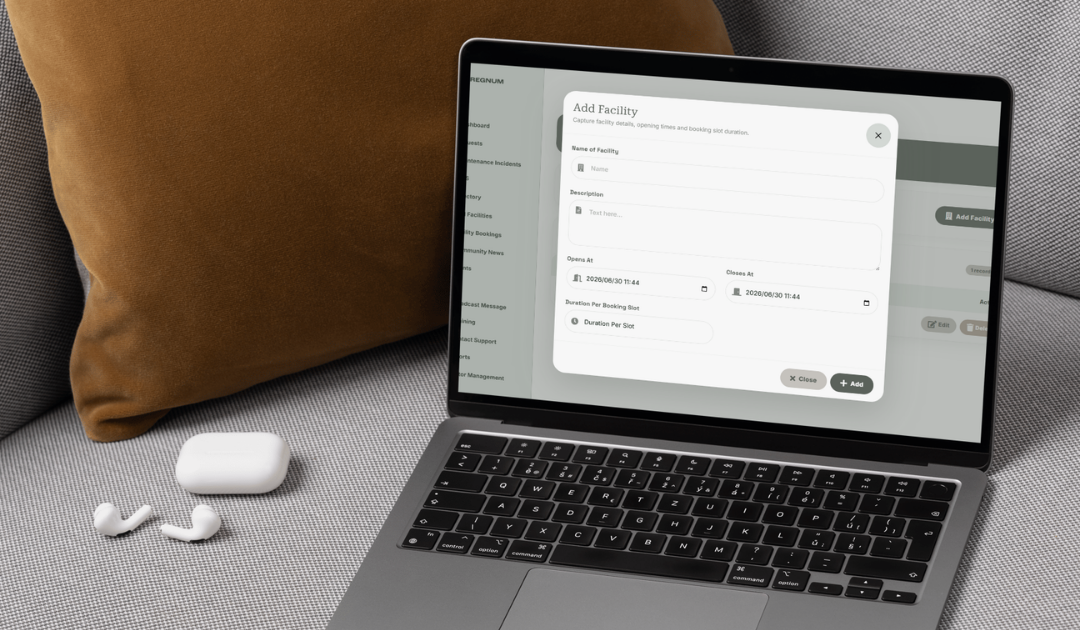
Aregnum’s facility management lets residents book shared spaces smoothly through the platform, managing and optimising bookings to enhance the resident experience while maximising the use of the amenities. Bookings are clear, confirmed and visible, preventing the double-bookings and uncertainty that informal arrangements produce. A resident booking the function room for a gathering can do so with confidence that the space is secured and will be available, which removes the anxiety and potential embarrassment of an informal arrangement that might fall through.
Fairness is especially important in a small building where residents know one another and perceived favouritism cuts deep. An informal booking system tends to favour the most assertive or best connected residents, leaving others shut out, and in a close community this unfairness is keenly felt and breeds resentment. An organised booking system allocates shared spaces on a clear, visible basis, treating residents even-handedly. This visible fairness is important for keeping the peace in a building where conflict over shared spaces can quickly become a personal grievance between neighbours.
Maximising the use of shared spaces ensures the building’s amenities deliver the value they should. Spaces that are hard to book or whose availability is unclear end up underused, as residents give up rather than navigate the hassle. A building that has provided a function room or terrace wants residents to use and enjoy them, not leave them idle because booking is too troublesome. A smooth booking process makes the spaces genuinely accessible, so residents actually enjoy the amenities the building offers, which is the point of providing them.
For the body corporate, organised booking removes a source of disputes that would otherwise land on them to resolve. Informal booking generates conflicts about who booked what and whether reservations were confirmed, and these disputes fall on the volunteers running the building. An organised system handles bookings cleanly and keeps a clear record, removing both the routine work and the disputes. For volunteers who have limited time and do not want to spend it refereeing arguments about the function room, this relief is genuinely valuable.
Because facility booking is part of the same platform that runs the building, bookings are tied to verified residents and sit alongside the communication, records and other features residents already use. There is no separate booking tool to manage, which matters for a smaller community with limited capacity to maintain systems. The shared space booking is part of the coherent whole of how the building operates, simple for residents to use and for the body corporate to oversee.
The personal dimension of shared-space conflict in a small building is what makes getting the booking right more important than the modest scale of the amenities might suggest. In a large estate, a dispute over a facility is a dispute with a faceless system or a distant manager, but in a small building it is a dispute with a neighbour who lives down the corridor and whom one cannot avoid. A booking mix-up that would be a minor annoyance elsewhere becomes a personal grievance between people who share a building, and such grievances poison the daily experience of living there. Removing the occasions for these conflicts, by making bookings clear, confirmed and fair, protects the neighbourly relations that are so central to whether a small building is a pleasant place to live.
A booking record also helps a small building make sensible decisions about its shared spaces, modest though they may be. Knowing how often the function room is actually used, whether the terrace is in genuine demand, and when the busy periods fall allows the building to manage these spaces thoughtfully rather than guessing. This might inform decisions about rules for the spaces, about maintenance scheduling, or about whether a space is serving the community as intended. For a small building making the most of limited shared amenities, understanding how they are actually used is valuable, and the booking record provides this understanding as a natural by-product of residents booking the spaces through the platform.
Shared spaces should enhance apartment living, not become a battleground that sours relationships between neighbours. The difference lies in how bookings are handled, and informal arrangements reliably produce conflict in close communities. Aregnum’s facility management gives residents clear, confirmed, fair bookings that prevent double-bookings, maximise use of the amenities, and spare the body corporate from refereeing disputes. For an apartment building with shared spaces, a proper booking system is what ensures those amenities bring residents together rather than driving them apart.
Frequently Asked Questions
How do residents book shared spaces on Aregnum?
Residents book shared spaces such as function rooms, terraces and lounges through the platform, with clear, confirmed and visible bookings that prevent the double-bookings and uncertainty common to informal arrangements.
Why is fair booking especially important in small buildings?
In a close community where residents see each other daily, perceived favouritism in access to shared spaces is keenly felt and breeds resentment. An organised system allocates spaces on a clear, visible basis, which helps keep the peace between neighbours.
Does booking help shared spaces get used more?
Yes. By making spaces easy and clear to book, the system maximises their use, so residents actually enjoy the amenities the building offers rather than leaving them idle because booking is too much hassle.
Does organised booking reduce work for the body corporate?
Yes. It handles bookings cleanly and keeps a clear record, removing both the routine work and the disputes that informal booking generates, so volunteers do not have to spend their limited time refereeing arguments over shared spaces.
See Aregnum in action
Ready to turn your community into an effortless, secure haven?