
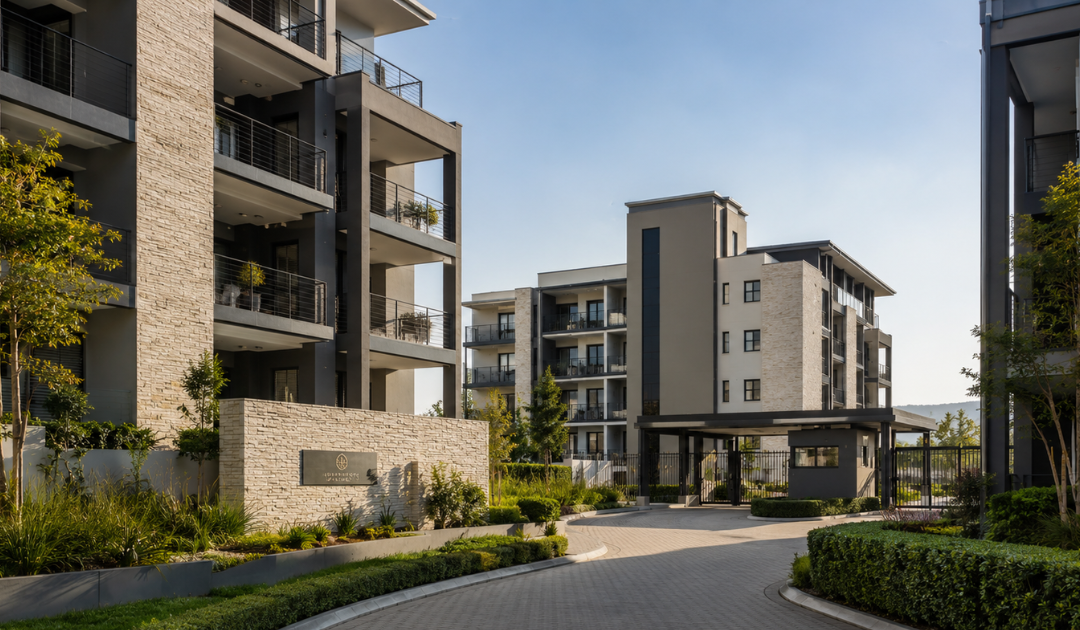
One System Across Estates, Office Parks and Buildings
Summary: Managing agents and groups often oversee a mix of property types, each with different visitor needs. This article looks at how one visitor management system serves estates, office parks and apartment buildings alike.
Many of the organisations responsible for visitor management do not oversee a single property of a single type. Managing agents handle portfolios that mix residential estates, office parks and apartment buildings. Property groups own and operate varied sites. Even a single large development may combine residential and commercial elements. For these organisations, the challenge is not visitor management at one property but visitor management across a range of property types, each with its own characteristics. A system that handles only one type forces the organisation to run several systems, which is exactly the fragmentation that makes managing a varied portfolio so difficult.
The different property types do have genuinely different visitor characteristics, which is why a one-size-fits-all approach that ignores those differences would be inadequate. A residential estate deals with residents’ personal visitors, domestic staff and household deliveries. An office park deals with business visitors, clients, contractors and commercial deliveries, often in higher volumes and with different patterns. An apartment building deals with residents’ guests in a denser, more compact setting. The visitor management has to accommodate these differences rather than pretending all properties are the same, while still being one coherent system rather than several disconnected ones.
Aregnum resolves this by being one platform that adapts to different property types rather than separate products for each. The underlying capability, recording visitors, tying them to the host who authorised them, supporting both guarded and unguarded entry, providing oversight, is common across all property types, because at root visitor management everywhere is about knowing who entered, for whom and on whose authority. What varies is how this common capability is applied: the kinds of hosts, the kinds of visitors, the security arrangements. One adaptable platform applies the common capability in the way each property type needs, which is far better than separate systems that share nothing.
For a residential estate within the portfolio, the platform applies its visitor management to residents authorising their personal visitors, with the access control and community context appropriate to estate living. For an office park, the same platform applies to tenants authorising business visitors and contractors, with the commercial context appropriate to that setting, working whether the park is guarded or not. For an apartment building, it applies to residents authorising guests in a denser setting. The agent uses one platform across all three, with its application fitting each, rather than learning and maintaining three separate systems.
The efficiency this brings to a managing agent is substantial. Running visitor management on one platform across a varied portfolio means one system to learn, one set of processes to master, one relationship to maintain, and one place to look for oversight across all properties. Running separate systems for different property types means multiplying all of these: several systems to learn, several sets of processes, several relationships, and no unified view across the portfolio. The consolidation onto one adaptable platform removes this multiplication, which for an agent managing many properties is a major operational simplification.
Oversight across the portfolio is a particular benefit of one platform. A managing agent needs to understand visitor activity across all the properties they manage, not just within each one in isolation. When all properties are on one platform, the agent has a unified view and can understand the portfolio as a whole. When properties are scattered across separate systems, no such unified view is possible, and the agent is left with disconnected fragments that cannot be combined. For an agent answerable to owners across a portfolio, this unified oversight is valuable for reporting and for understanding their whole operation.
There is also the matter of properties that combine types or change type over time. A mixed-use development with both residential and commercial elements needs visitor management that handles both within one property, which a single-type system cannot do. A property that changes character, perhaps a building that shifts between residential and commercial use, needs a system that adapts rather than one that becomes obsolete when the use changes. An adaptable platform handles these mixed and changing cases naturally, where rigid single-type systems cannot, which protects the organisation against the variety and change that real portfolios contain.
Consistency of experience across the portfolio benefits the people interacting with the properties too. A host authorising a visitor, a visitor arriving, a manager checking the record: these experiences being consistent across an agent’s properties, rather than different at each, makes everything more intuitive and reduces confusion. A resident who moves between an agent’s properties, or a contractor who works across several, encounters a familiar system rather than a different one at each. This consistency is a quiet benefit of one platform that fragmented systems cannot provide.
It is worth noting that one adaptable platform is not the same as one rigid system imposed uniformly, which would fail to respect the real differences between property types. The value of Aregnum’s approach is precisely that it is one platform that adapts, applying common capability in property-appropriate ways, rather than one inflexible system that ignores differences. This combination, unified but adaptable, is what a varied portfolio actually needs: the coherence of a single system with the flexibility to fit each property type within it.
The common core beneath the apparent variety of property types is what makes a single adaptable platform possible, and identifying that core clarifies why one system can serve such different settings. Beneath the differences between estates, office parks and apartment buildings, visitor management everywhere is fundamentally about the same things: knowing who entered, tying each visitor to the host who authorised them, supporting entry whether or not a guard is present, and providing oversight of the whole. These core functions do not change from one property type to another; what changes is the surface detail of who the hosts are, what kinds of visitors arrive, and how the security is arranged. A platform built around the common core, with the flexibility to accommodate the surface differences, can serve all property types coherently, which is the basis of Aregnum’s cross-type capability.
The fragmentation that results from using different systems for different property types imposes costs on a managing agent that are easy to underestimate, and they are worth spelling out. Each separate system means a separate tool to learn and keep current, a separate set of processes for staff to master, a separate support and vendor relationship to maintain, and a separate island of data that cannot be combined with the others. An agent running several property types on several systems multiplies all of these burdens and gains no unified view across the portfolio. Consolidating onto one adaptable platform collapses these multiplied burdens into one of each and yields a single view across all properties, which for an agent managing a varied portfolio is a substantial reduction in complexity and cost.
The unified oversight that one platform provides across a portfolio is valuable not just for efficiency but for understanding the portfolio as a whole, which an agent answerable to multiple owners genuinely needs. With every property on one platform, an agent can see visitor activity across the entire portfolio, compare properties, spot patterns and report coherently to the owners of each. With properties scattered across separate systems, no such portfolio-level view is possible; the agent has only disconnected fragments that cannot be combined into an understanding of the whole. For an agent whose business is managing a portfolio of properties, the ability to see and understand that portfolio as a whole, rather than as a collection of unrelated sites, is a meaningful advantage that only a unified platform can provide.
It is worth distinguishing an adaptable platform from a rigid system imposed uniformly, because the value lies precisely in the combination of unity and flexibility, not in uniformity alone. A single rigid system forced identically onto every property type would fail, because it would ignore the real differences between an estate, an office park and an apartment building. What serves a varied portfolio is a platform that is unified in its core and its oversight but flexible in how it applies to each property type, so that each property gets visitor management appropriate to it within a single coherent system. This combination, the coherence of one platform with the adaptability to fit each setting, is what a varied portfolio actually requires, and it is what distinguishes a genuinely cross-type platform from either a rigid one-size-fits-all system or a fragmented collection of single-type ones.
The combination of a unified core with the flexibility to fit each setting is precisely what a varied portfolio needs, and it is what distinguishes a genuinely cross-type platform from the alternatives. Neither a rigid one-size-fits-all system nor a fragmented collection of single-type systems serves a mixed portfolio well; the first ignores real differences while the second forfeits coherence and oversight. A platform that is one coherent system yet adapts to estates, office parks and apartment buildings alike gives an agent both the unity and the flexibility that managing varied properties demands, which is why this combination is the right foundation for visitor management across diverse sites.
Organisations responsible for visitor management across varied properties need a system that is one coherent platform yet adapts to the real differences between estates, office parks and apartment buildings. Aregnum provides exactly this: common visitor management capability applied in the way each property type requires, on one platform with unified oversight across the portfolio. For managing agents and property groups overseeing a mix of site types, this combination of coherence and adaptability is far more effective than the fragmentation of running a different system for every kind of property.
Frequently Asked Questions
Can one system handle estates, office parks and apartment buildings?
Yes. Aregnum is one platform that adapts to different property types rather than separate products for each. The common capability of recording visitors and tying them to their host is applied in the way each property type needs, on a single platform.
Do different property types not have different visitor needs?
They do, and the platform accommodates those differences. An estate handles personal visitors, an office park handles business visitors and contractors, and an apartment building handles guests in a denser setting, with the common capability applied appropriately to each.
What is the benefit for a managing agent with a mixed portfolio?
One platform across the portfolio means one system to learn, one set of processes, and unified oversight across all properties, rather than multiplying systems, processes and relationships by running a different system for each property type.
Can it handle mixed-use or changing properties?
Yes. An adaptable platform handles mixed-use developments with both residential and commercial elements within one property, and adapts when a property changes character, where rigid single-type systems would become obsolete.
See Aregnum in action
Ready to turn your community into an effortless, secure haven?